
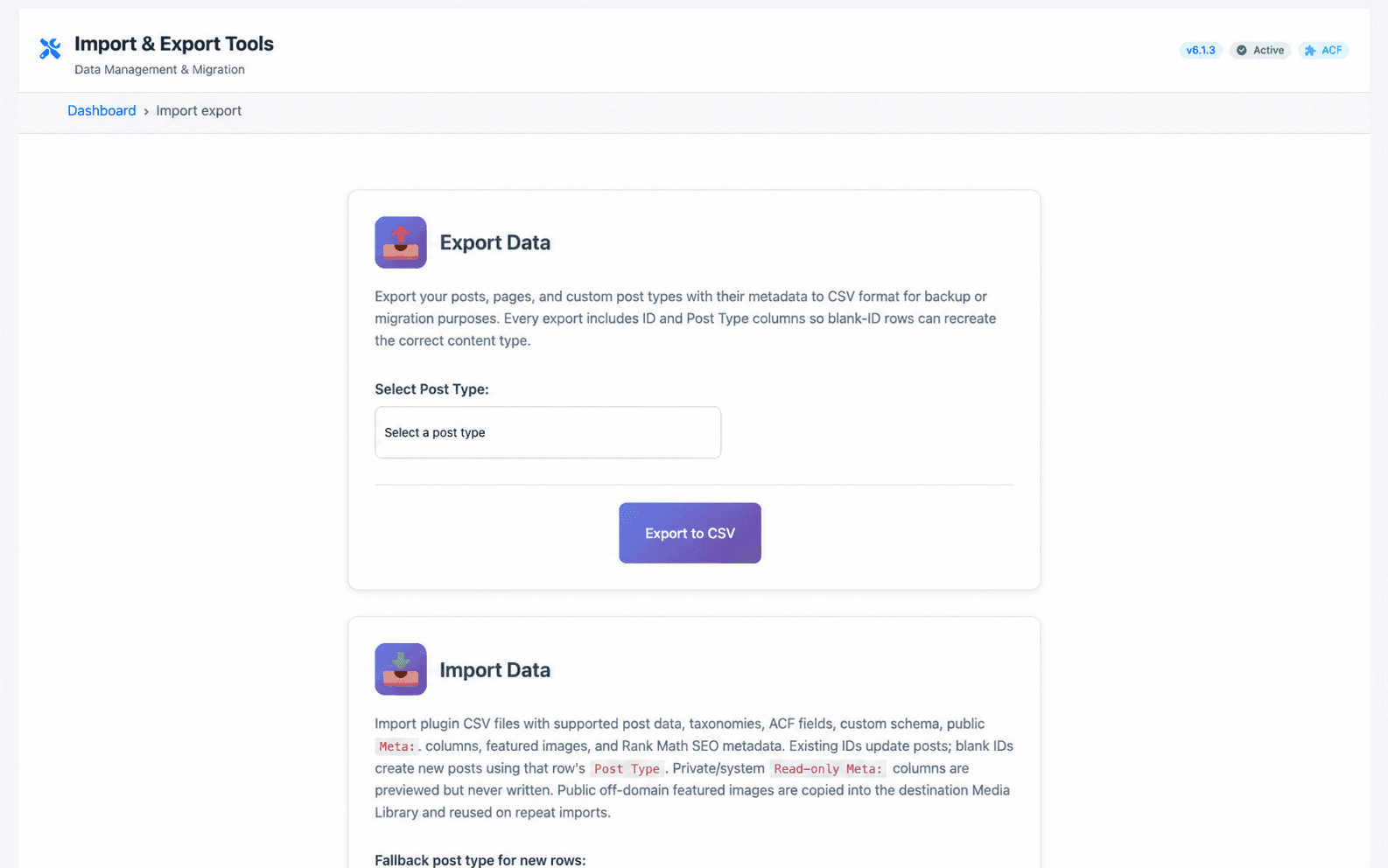
Content data operations: Batch-aware CSV import and export for core post fields, mixed post types, taxonomies, ACF fields, custom schema, public metadata, and Rank Math fields
Back to Adrian's portfolio
Case studyWordPress Platform Engineering
WP Tools
WordPress site management
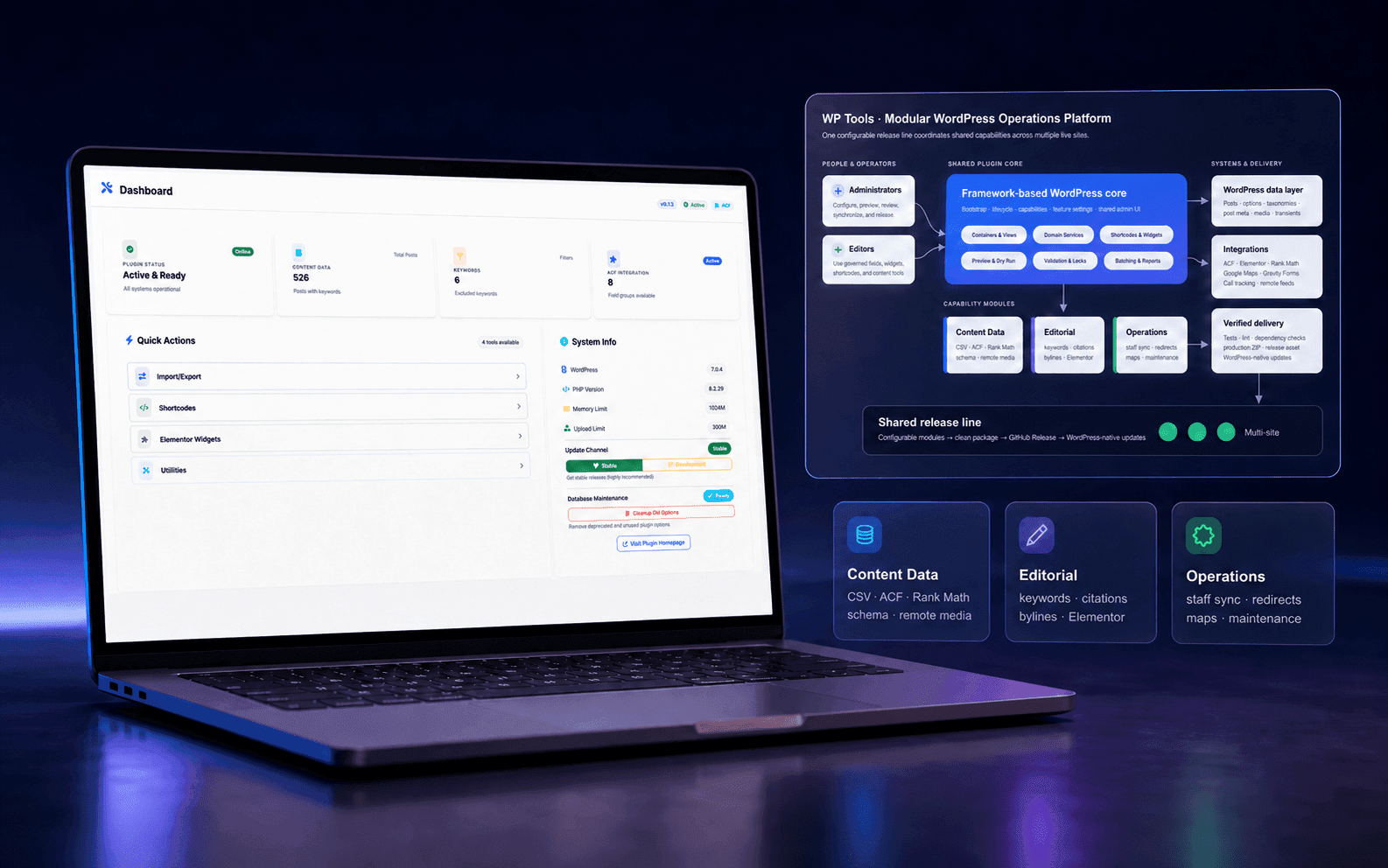
I consolidated recurring functionality into a modular plugin with guarded data workflows, reusable editorial tools, and a repeatable release pipeline.
System profile
RoleLead WordPress Plugin Developer and Maintainer
TimelineJune 2025–present
ProductionActive and in production
ContextMulti-site organization
v6.1.3
Audited release
Inspected August 21, 2026
330
Repository commits
Through the audited release
11
Managed shortcodes
Registered in the audited source
10
Elementor widgets
Across core and embedded add-ons
44,209
Application PHP lines
Repository-derived count
01 / The problem
Repeated site maintenance
Ongoing requests across multiple WordPress sites created a growing maintenance surface: dynamic content rules, editorial attribution, structured data, location discovery, bulk content operations, redirects, and site-specific utilities all needed to evolve without becoming a collection of fragile snippets or duplicated plugins.
PHP 7.4+JavaScriptCSSSQL through WordPress APIsWordPress 5.0+Composer / PSR-4PHPUnit 9Node.js build tooling
04 / Features
Site management tools
The case study focuses on the verified engineering surface rather than unmeasured business claims.
Content data operations: Remote featured-image imports with source provenance and duplicate reuse
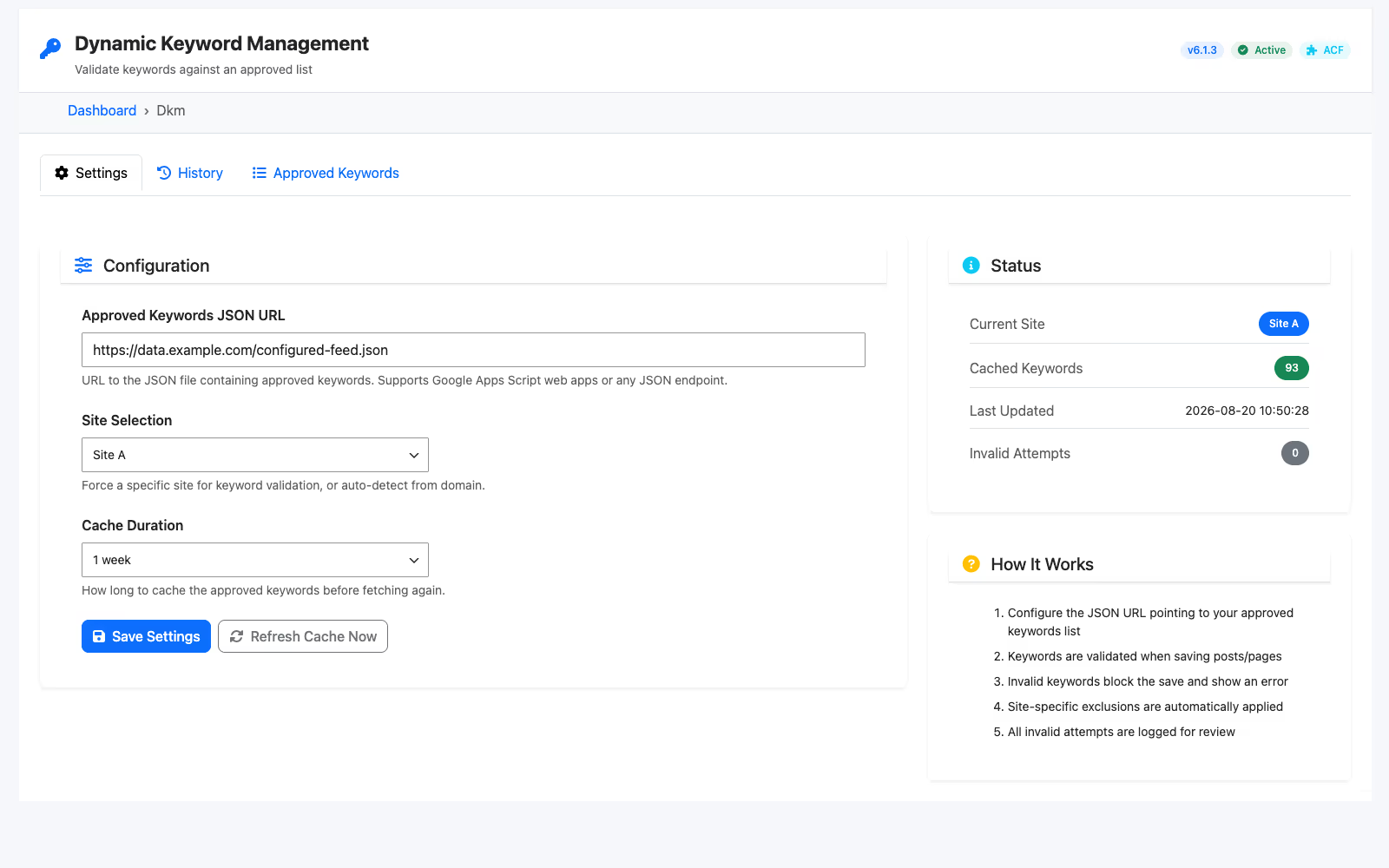
Dynamic content and keyword governance: ACF keyword helpers and cookie-backed context
Dynamic content and keyword governance: Dynamic Keyword Value rendering with filtering and transformations
Editorial trust and structured content: Author, editor, reviewer, and staff presentation workflows
Editorial trust and structured content: Rank Math JSON-LD extensions and custom schema merging
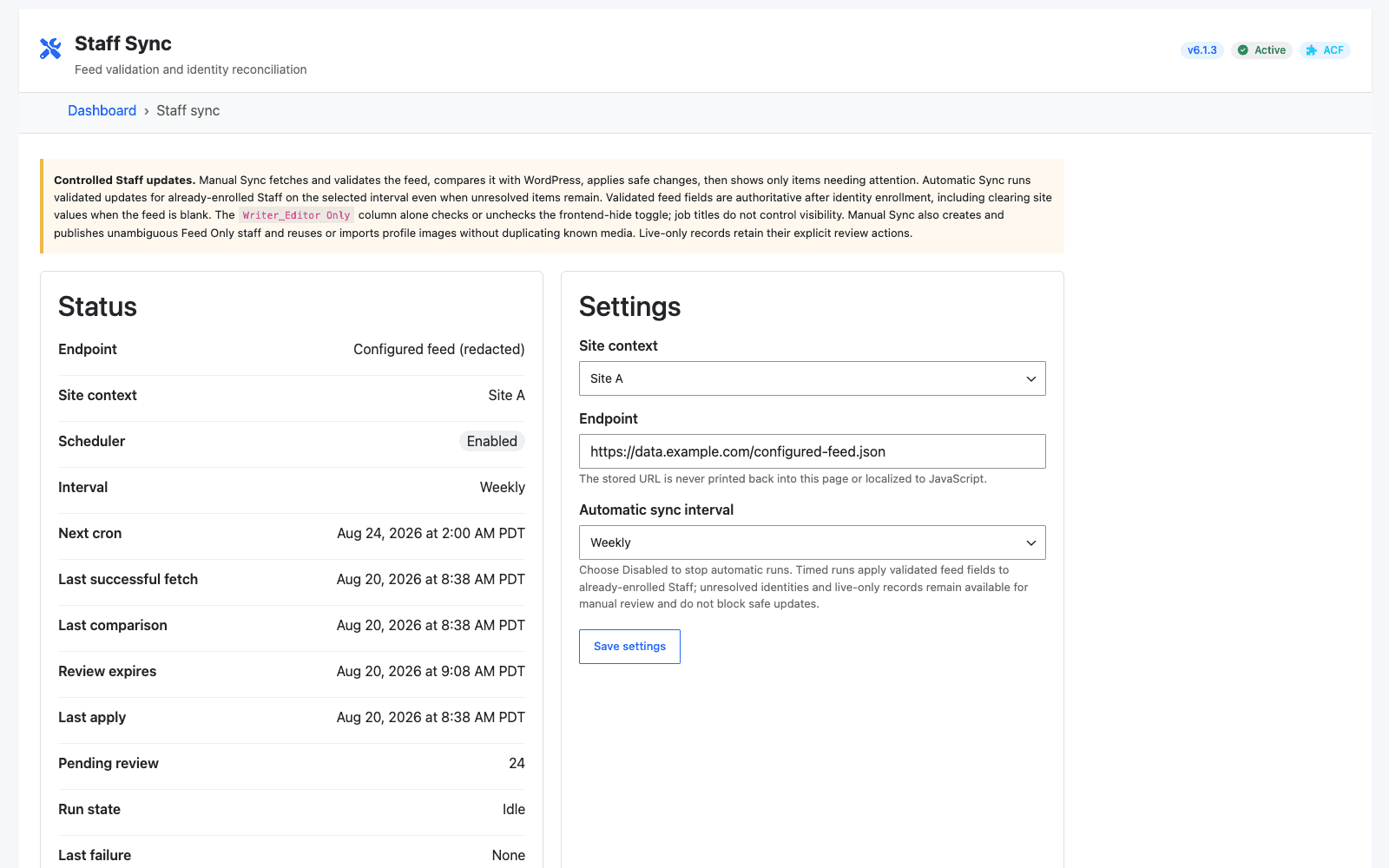
Staff synchronization: Controlled remote-feed preview, validation, normalization, identity resolution, diffing, and review
Staff synchronization: Manual enrollment and creation workflows with bounded automatic updates
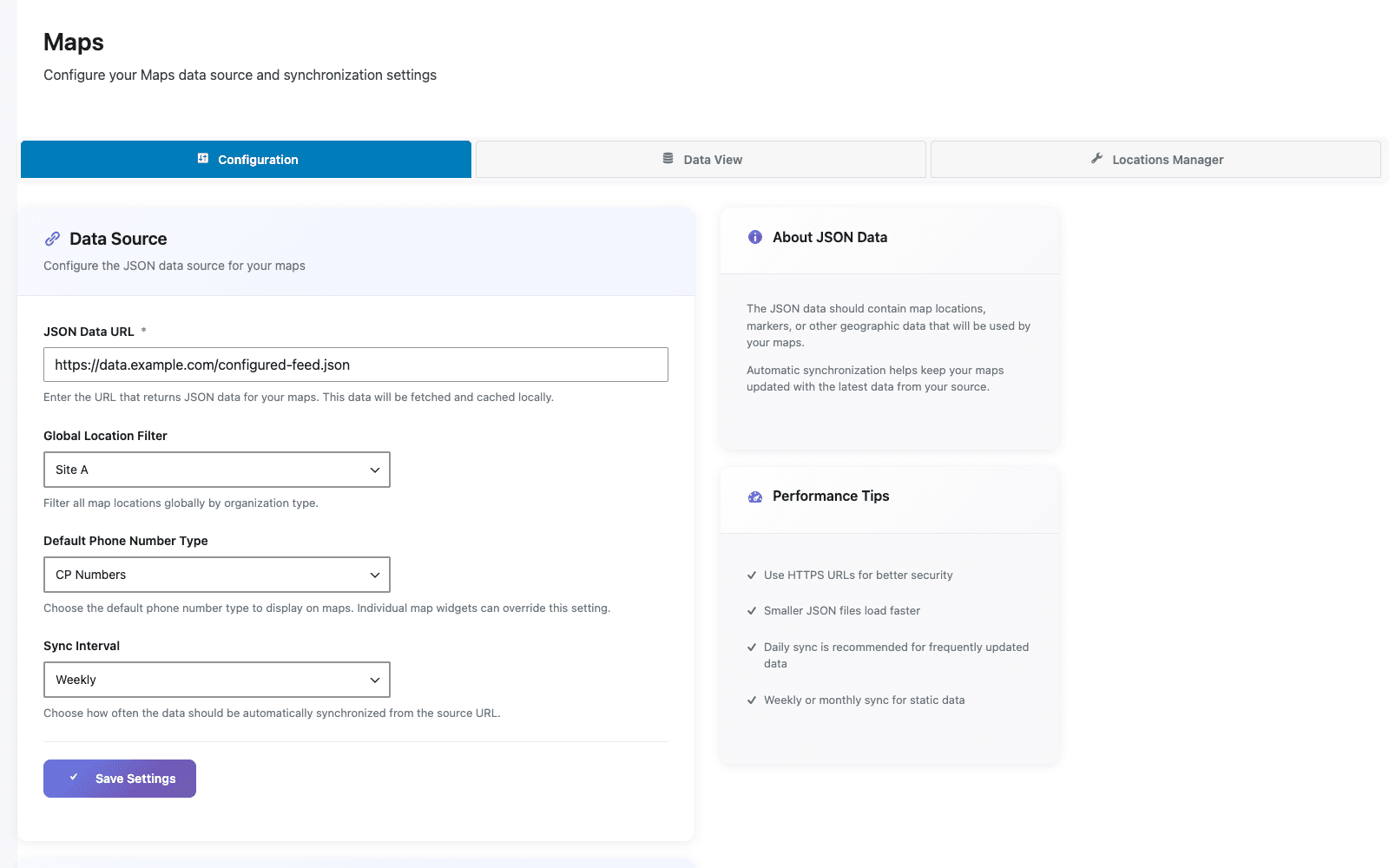
Location discovery: Google Maps and filter Elementor widgets with cross-widget communication
Location discovery: Location, audience, program, condition, and accommodation filtering
Inside the platform
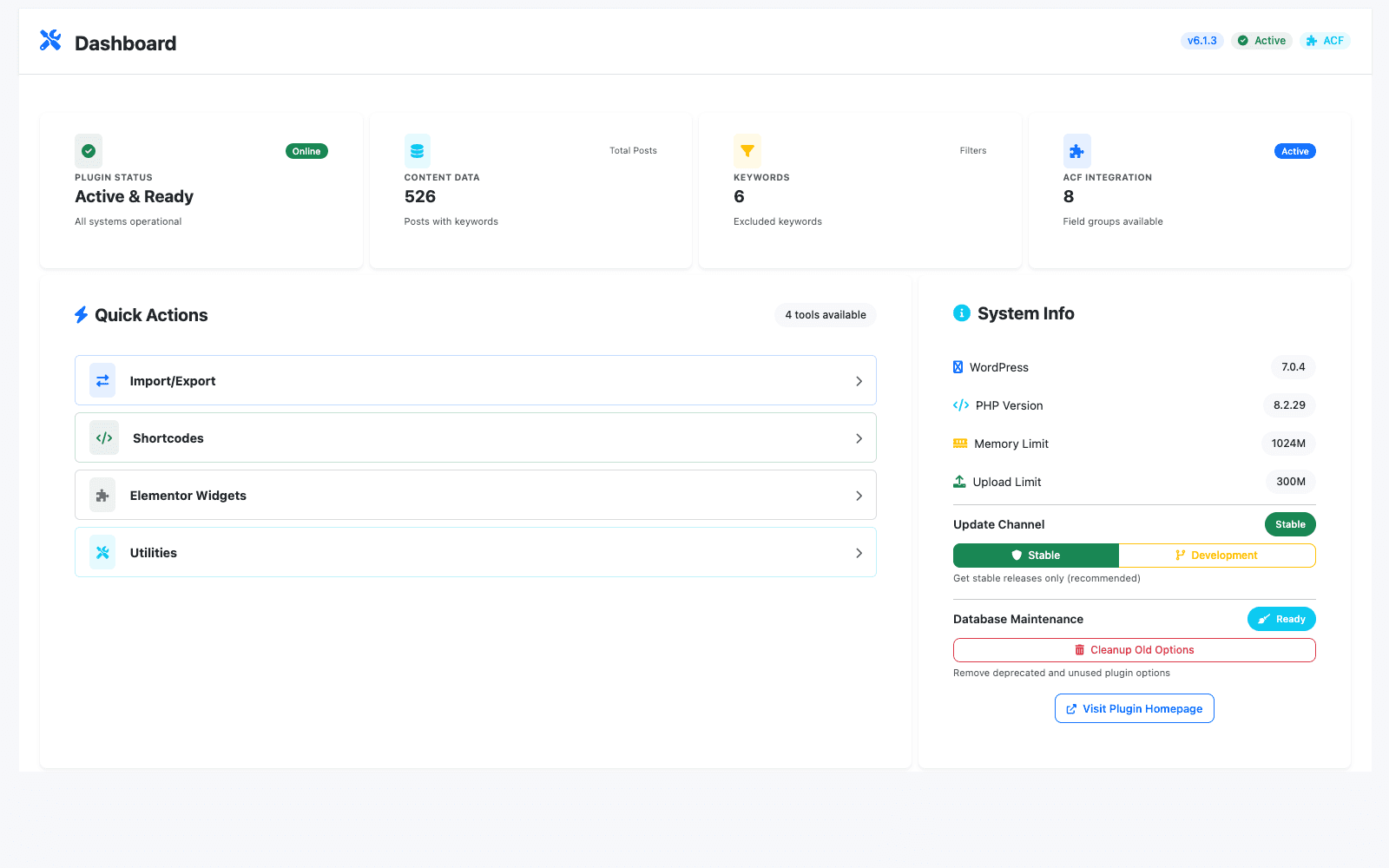
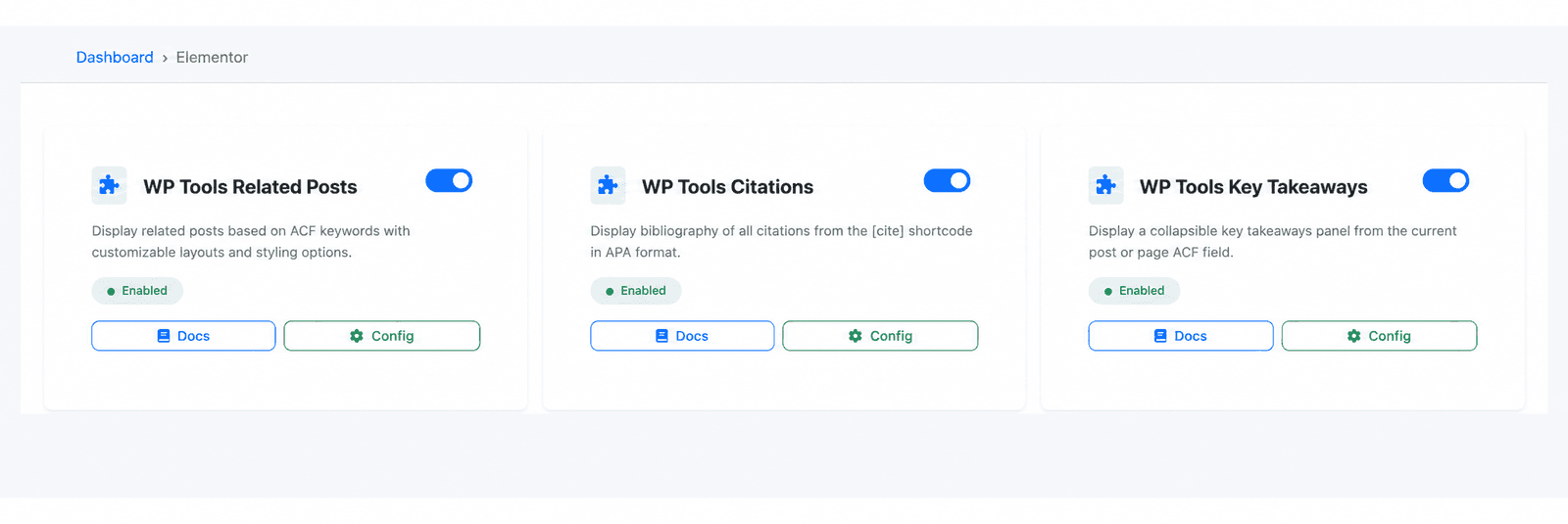
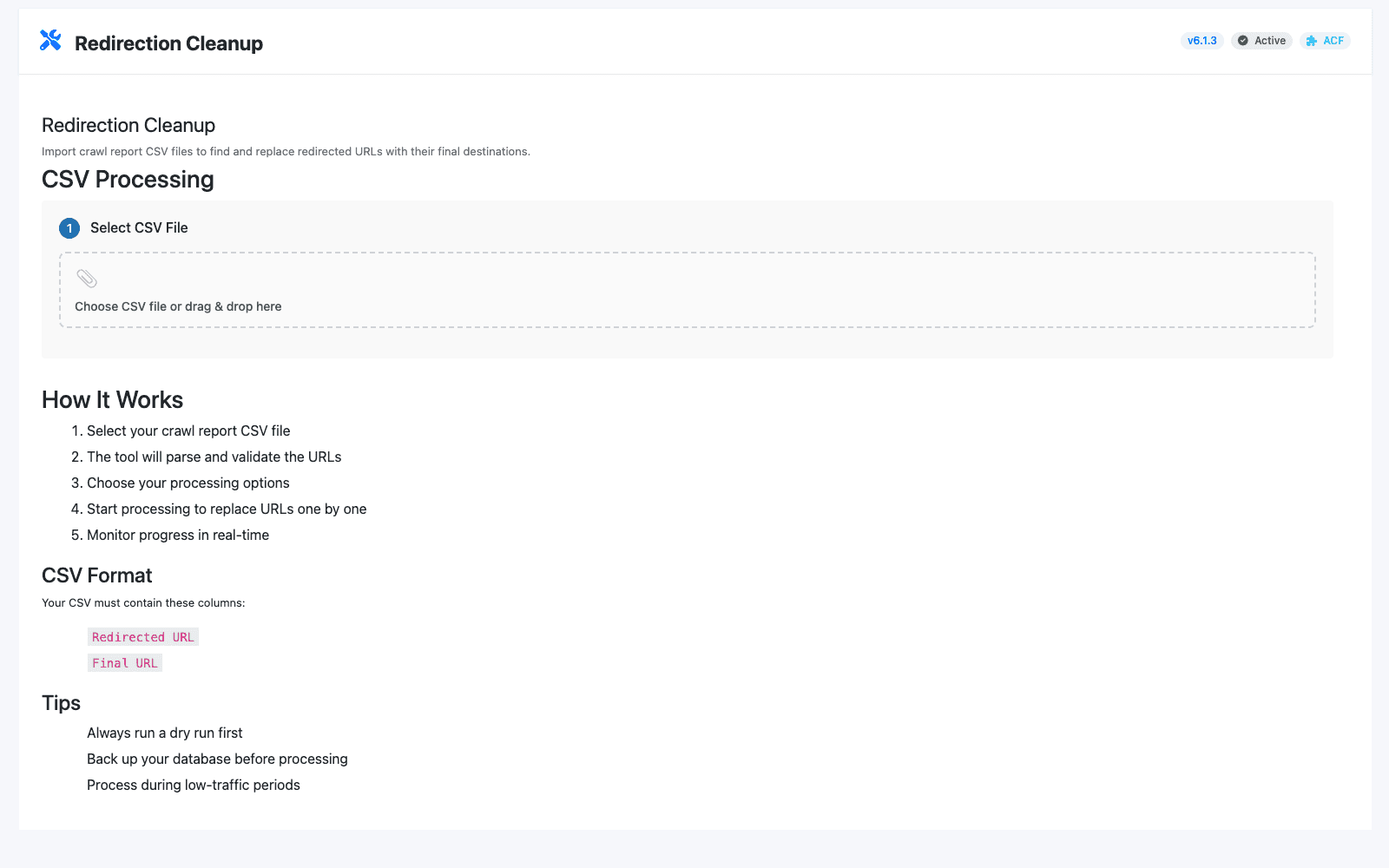
Operational interfaces, not opaque scripts
Sanitized local captures use synthetic data and hide client-specific infrastructure.
02 / The approach
Shared plugin modules
Build a modular plugin platform around a reusable MVC-style WordPress framework, then move recurring site functionality into explicit controllers, services, views, shortcodes, widgets, and embedded add-ons. Expose operations through a consistent admin interface, store feature switches in WordPress options, and ship verified release packages through WordPress's native update experience.
03 / Architecture
Plugin structure
The implementation separates WordPress integration points from the domain services and operational controls that carry the workflow.
05 / Engineering decisions
Module and framework choices
The design choices below address compatibility, identity, safety, and maintainability constraints found in the audited implementation.
06 / Results
Testing and release
Repository and interface evidence establish the engineering outcome. Production volume, time savings, and business impact remain unclaimed unless separately confirmed.
Back to Adrian's portfolio
Built and maintained by Adrian T. Saycon
Keep exploring
Related projects
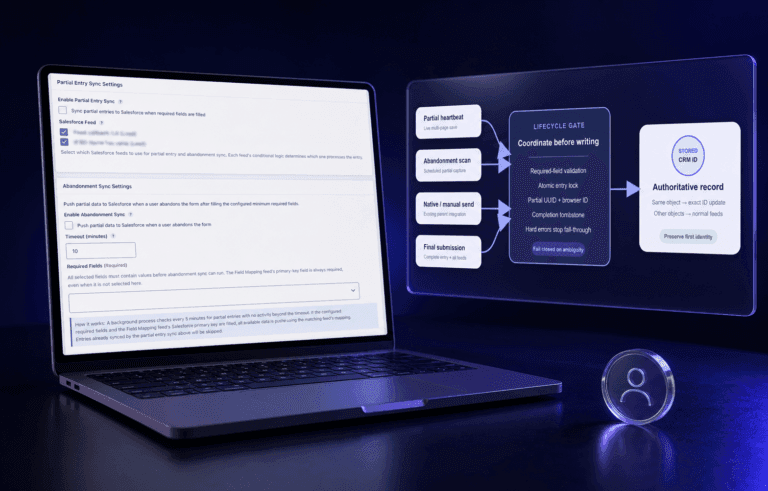 PluginSalesforce Extended for Gravity FormsA duplicate-safe partial lead workflow that preserves one Salesforce record across abandonment, heartbeats, and final submission.View project
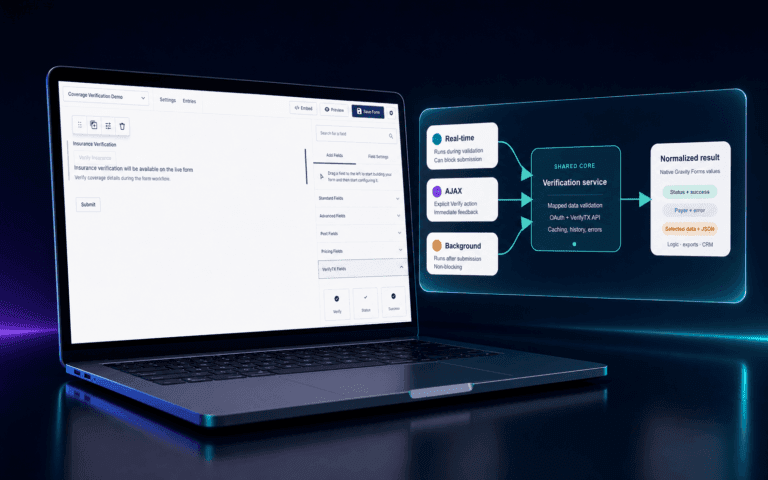 PluginVerifyTX for Gravity FormsA configurable Gravity Forms eligibility workflow with OAuth, three verification timings, and reusable result fields.View project
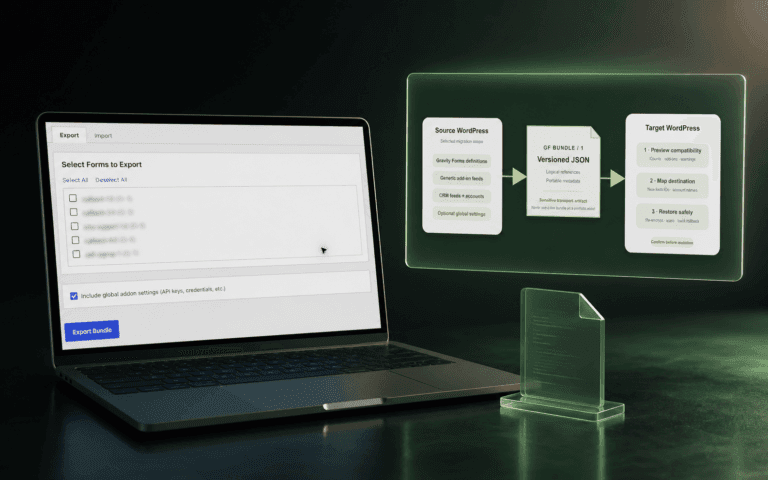 PluginGF Bundle PorterA preview-first migration utility for Gravity Forms, add-on feeds, Salesforce configuration, and destination-aware settings.View project