Structured CSV import and export for posts, taxonomies, ACF, SEO metadata, schema, and media
Case studyWordPress Platform Engineering
AMFM Tools
One maintainable platform for three evolving WordPress sites
I consolidated recurring client functionality into a modular plugin with guarded data workflows, reusable editorial tools, and a repeatable release pipeline.
System profile
RoleLead WordPress Plugin Developer and Maintainer
TimelineJune 2025–present
ProductionActive · used on three live sites
ContextMulti-site organization
3
Live WordPress sites
User-confirmed production scope
v6.1.3
Audited release
Inspected August 21, 2026
330
Repository commits
Through the audited release
11
Managed shortcodes
Registered in the audited source
10
Elementor widgets
Across core and embedded add-ons
01 / The problem
The maintenance surface kept growing
Ongoing requests across related WordPress sites were expanding into dynamic content rules, editorial attribution, structured data, location discovery, bulk content operations, redirects, and site-specific utilities.
Without a shared platform, fixes would be duplicated, installations would drift, and high-risk maintenance work would remain difficult for administrators to review.
02 / The approach
A platform, not a pile of features
I rebuilt the plugin around a reusable MVC-style WordPress framework with explicit controllers, services, views, shortcodes, widgets, and embedded add-ons.
Feature registries and site-aware configuration keep one release line adaptable across installations without creating long-lived forks.
WordPressPHPJavaScriptAdvanced Custom FieldsElementorRank MathGoogle MapsPHPUnit
03 / System surface
One extension point for recurring operational needs
The platform groups related workflows into maintainable domains while keeping a consistent administration and delivery model.
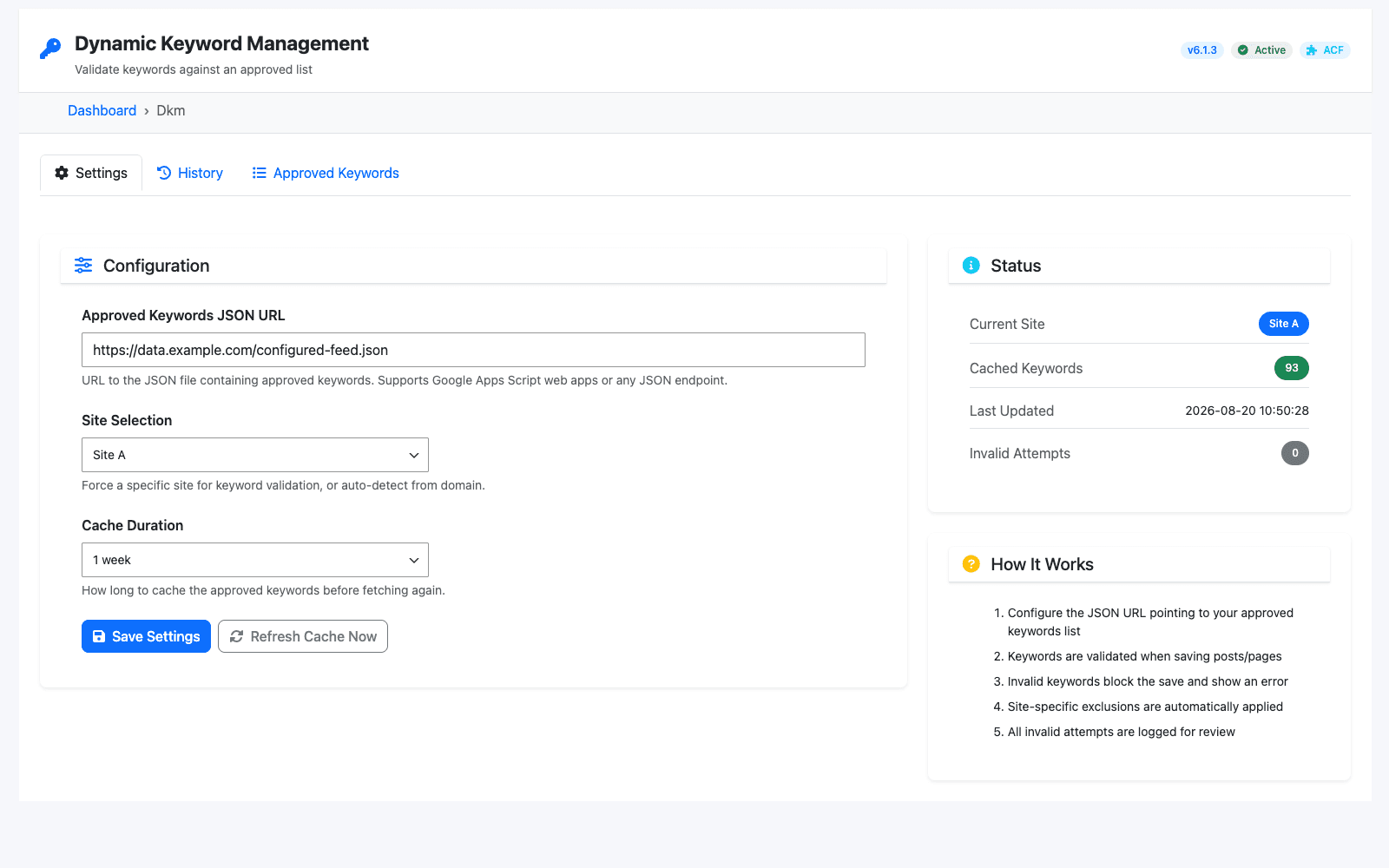
Dynamic keyword governance with caching, validation, exclusions, and history
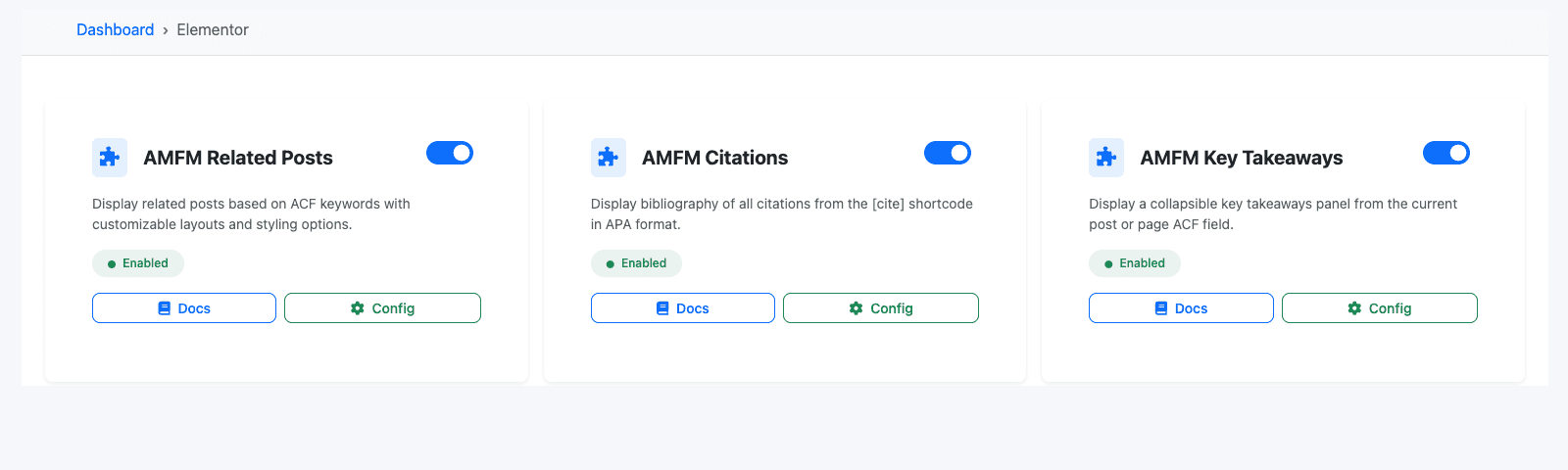
Editorial bylines, citations, related content, key takeaways, and structured data
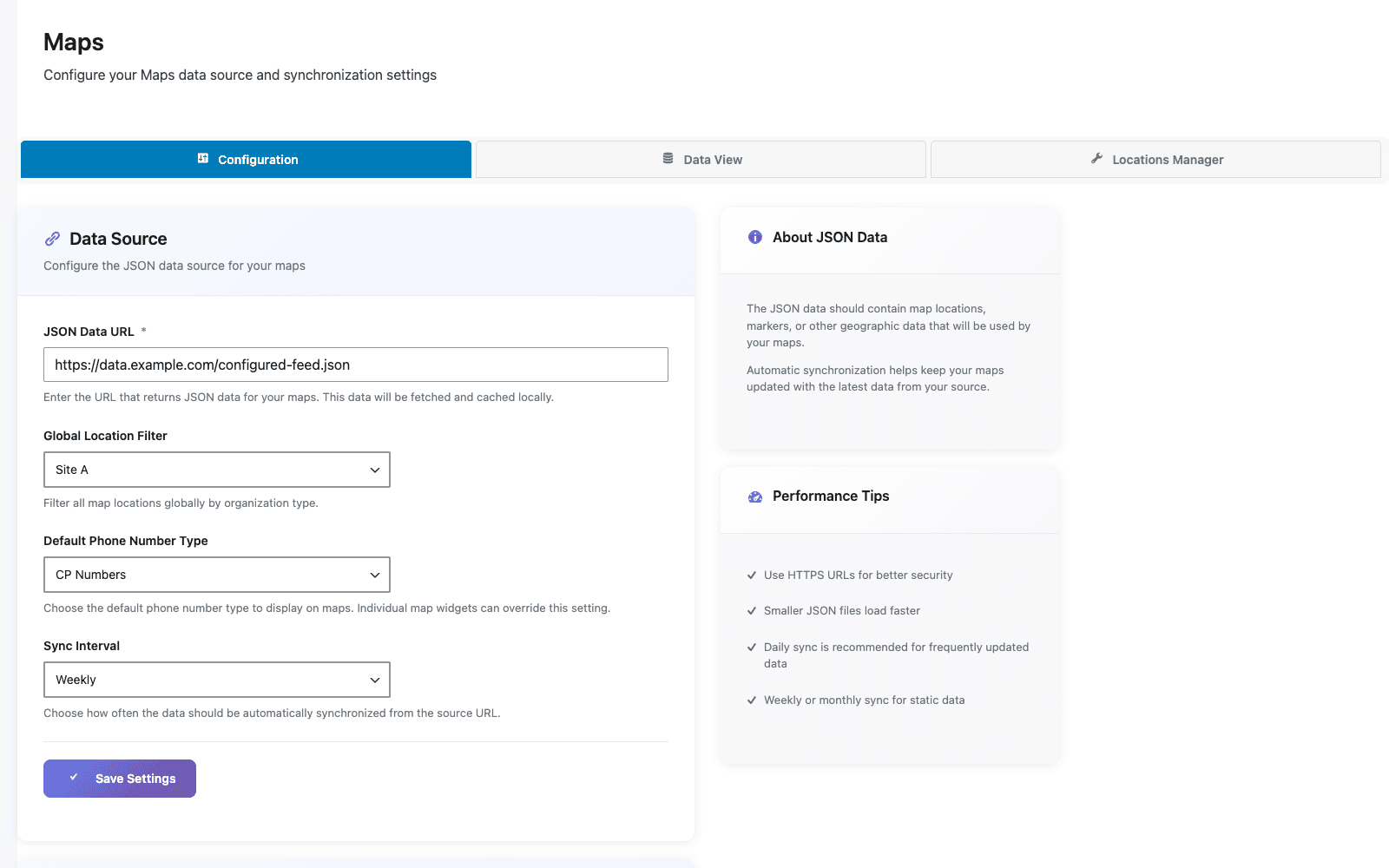
Location discovery with synchronized data, independent Elementor widgets, and responsive filters
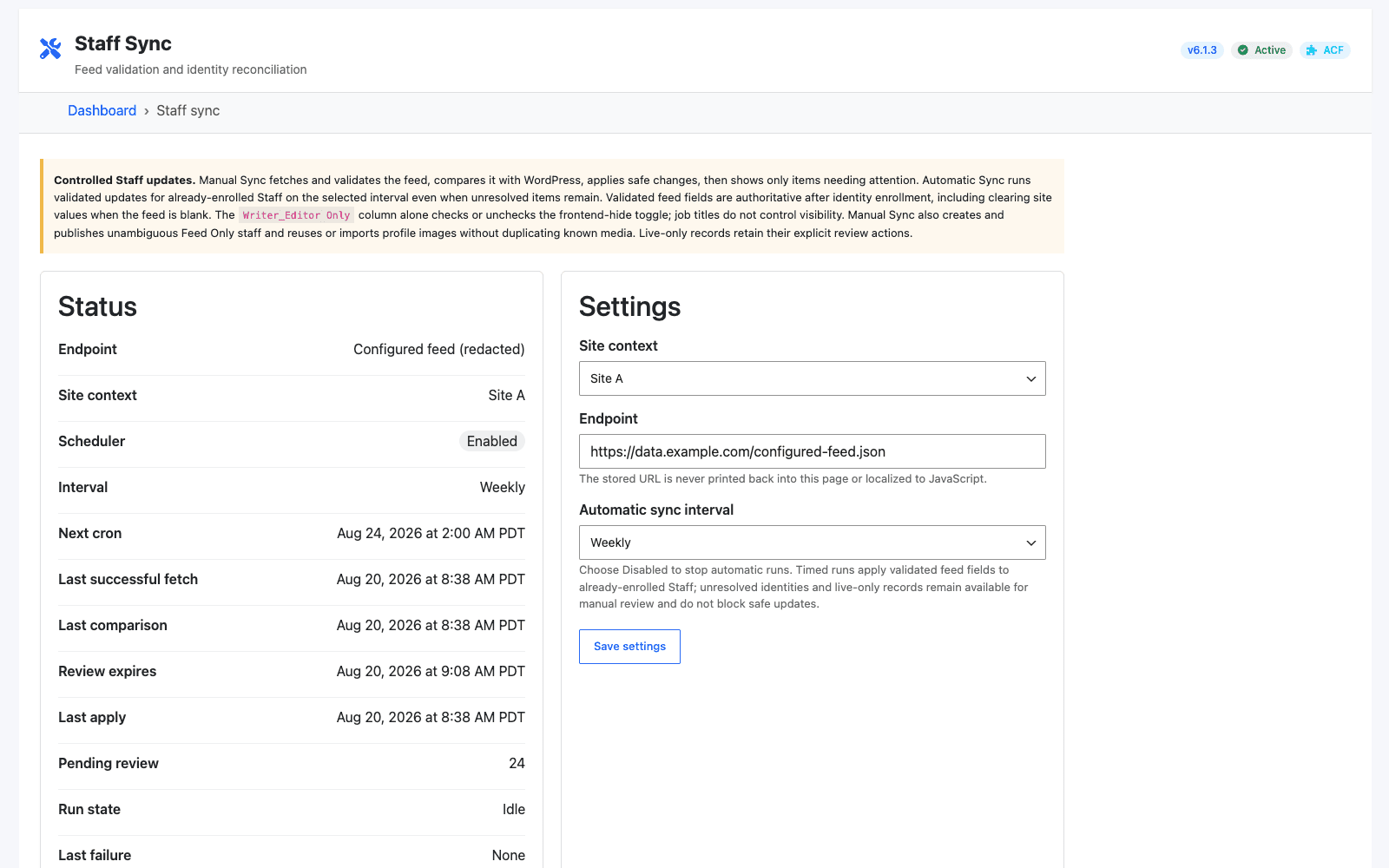
Controlled staff synchronization that protects IDs, slugs, references, and local edits
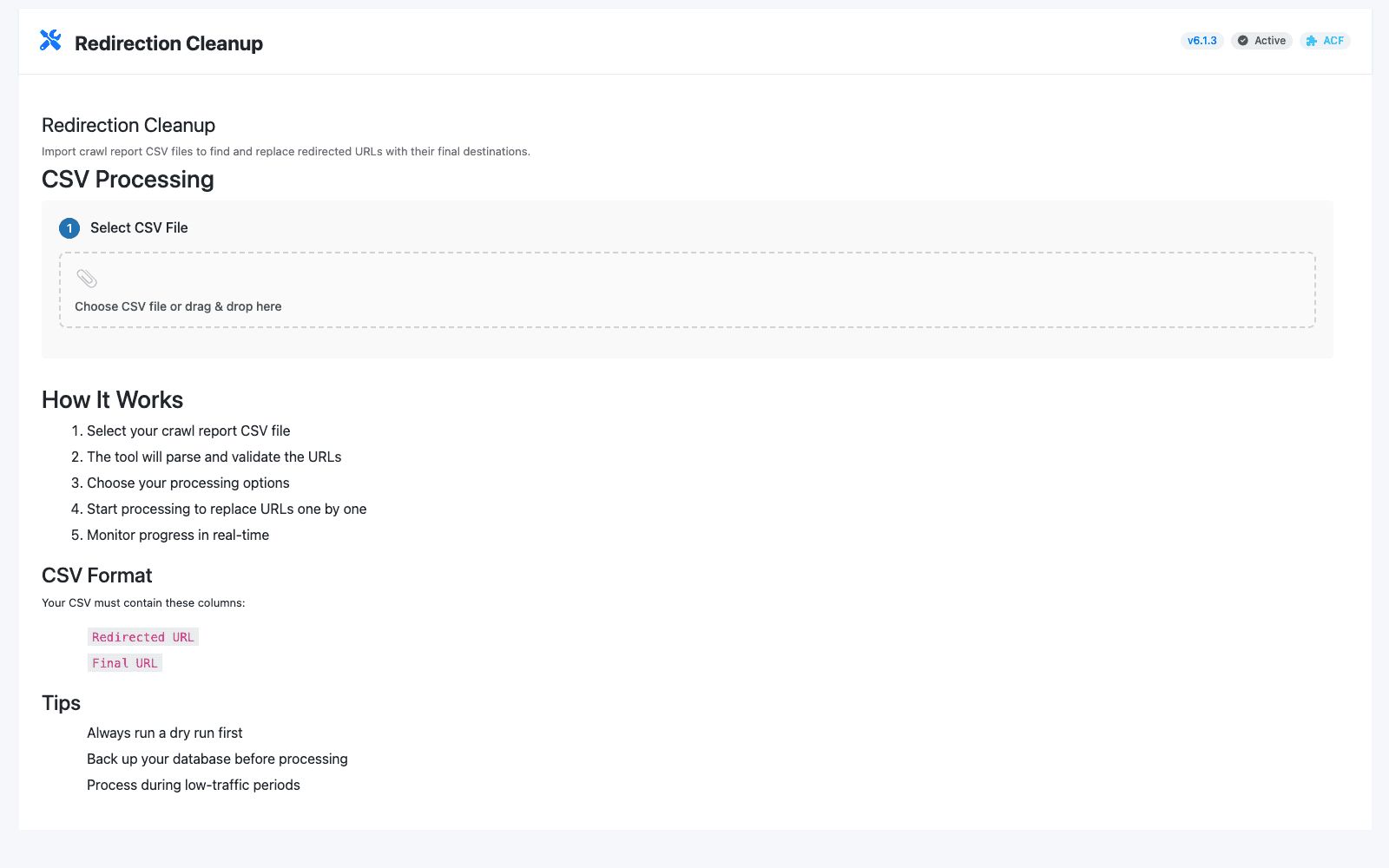
Dry-run-first redirect migration across content, metadata, options, and serialized values
Configurable shortcodes, widgets, and maintenance utilities without per-site forks
Verified production packages delivered through GitHub Releases and WordPress-native updates
04 / Operational safety
Bulk changes became reviewable workflows
The most important engineering decision was to treat broad content and database mutations as operator-reviewed pipelines. Each workflow makes scope, state, and failure visible before production data changes.
Preview and dry-run modes before destructive writes
Batch processing with progress and resumable state
Validation, warnings, and downloadable diagnostics
Locks, source hashes, provenance, and duplicate reuse
Capability and nonce protection for administrative actions
Bounded remote requests with cached fallback data
Inside the platform
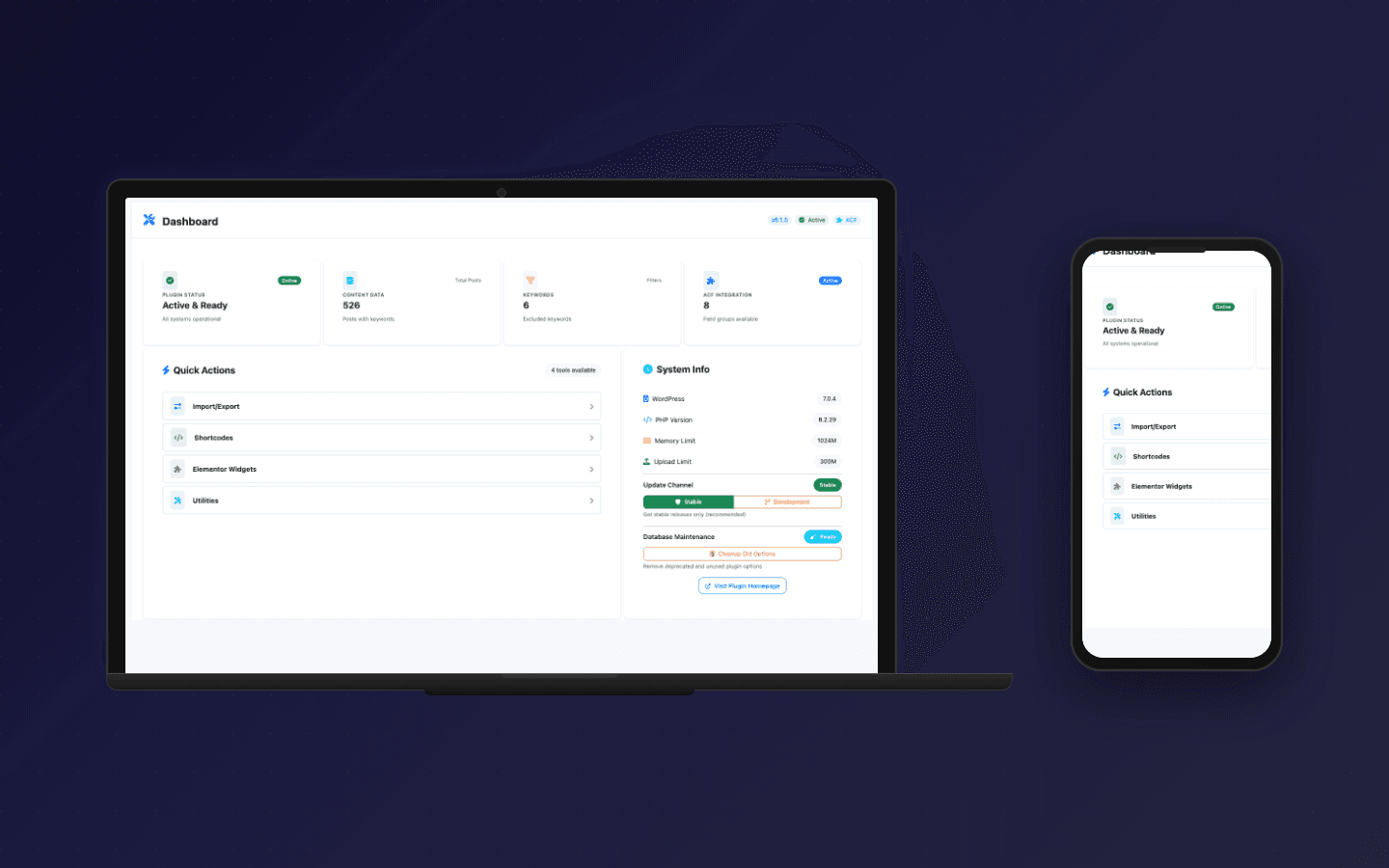
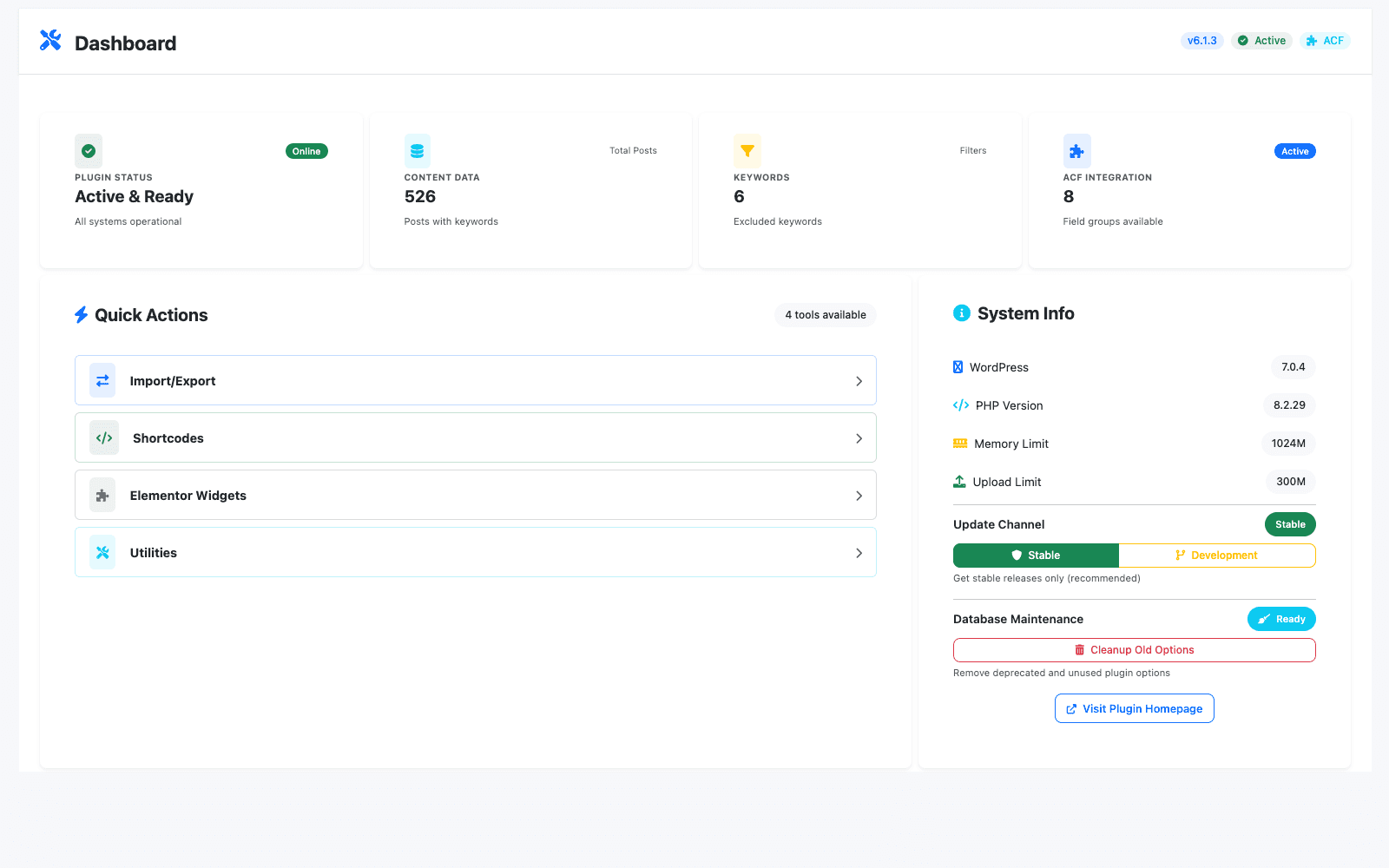
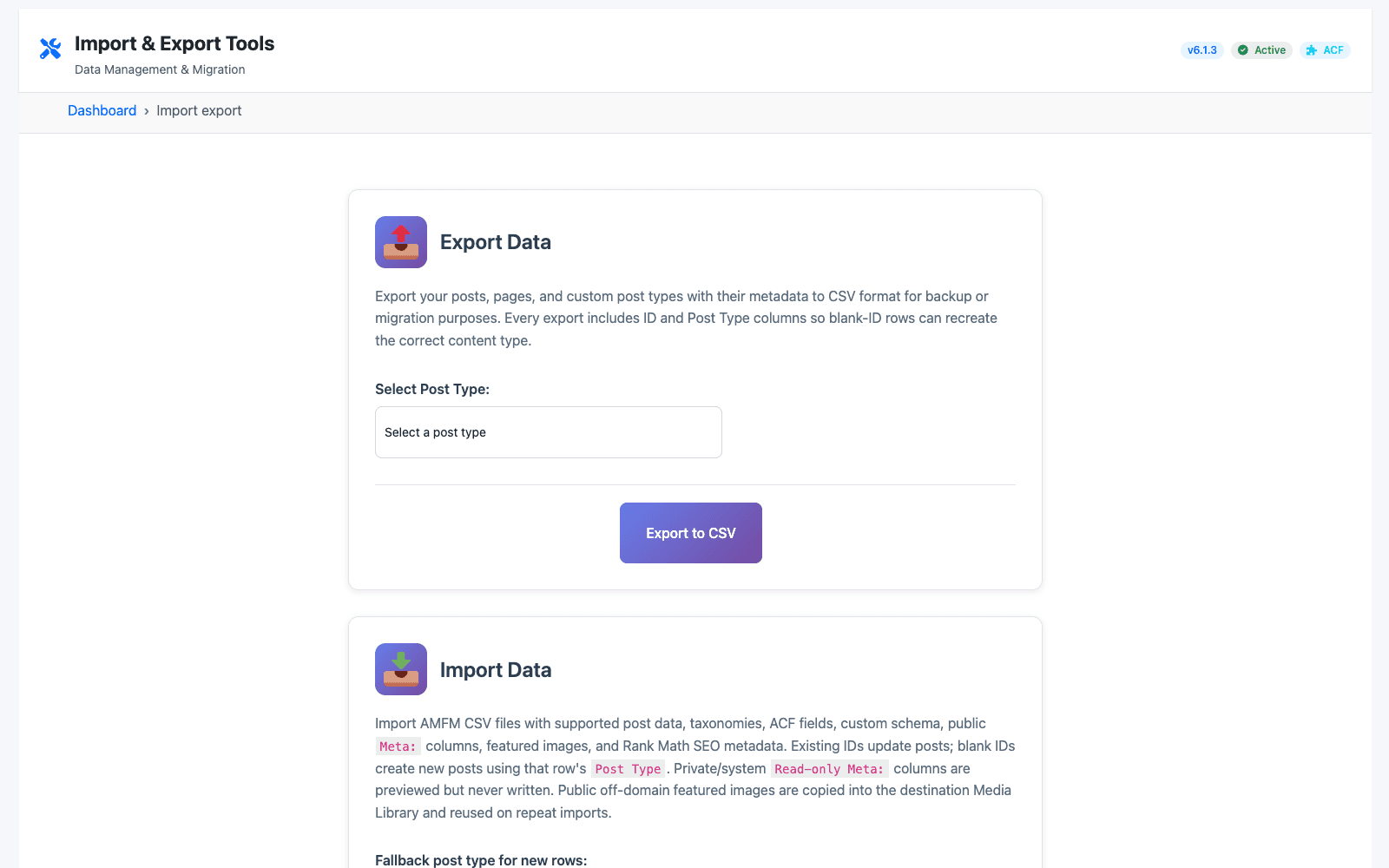
Operational interfaces, not opaque scripts
Sanitized local captures use synthetic data and hide client-specific infrastructure.
05 / Delivery
A shared release process keeps installations aligned
The production build creates a runtime-only ZIP, checks dependencies and syntax, runs the maintained verification suite, validates package contents, and publishes through GitHub Releases.
WordPress-native update handling gives each installation a common path to receive shared fixes while still supporting stable and development channels.
06 / Outcome
A maintainable foundation for the next request
AMFM Tools is currently used on three live sites and remains the shared extension point for new client functionality. Administrators receive reusable interfaces for work that would otherwise require isolated scripts or direct database changes.
These capabilities save the team time and resources by replacing repeated developer intervention, one-off scripts, and duplicated site-specific maintenance with shared, reusable workflows.
All portfolio projects
Built and maintained by Adrian T. Saycon